The Ultimate Frome Independent Market Guide: Sourcing Antiques with Soul
Last Sunday, Sarah discovered a 19th-century French baker's rack tucked away in a quiet corner of Somerset, its iron frame bearing the exact rusted patina of a century spent in an Alpine village. It’s this specific thrill of the find that draws over 80,000 visitors annually to the town’s cobbled streets, yet the sheer scale of the event can leave even seasoned buyers feeling lost. This Frome Independent Market guide serves as your curated compass through the 200 plus independent traders, ensuring you distinguish between a genuine heirloom and a modern imitation.
You likely know the frustration of spotting a piece with soul, only to worry if its weathered grain is authentic or merely a clever factory finish. It's a common doubt. We’ll show you how to identify true provenance and arrange the transport of a heavy oak farmhouse table back to your home without the usual logistics headache. From a timed itinerary of the best back-street traders to expert tips on styling your reclaimed treasures, this guide ensures your next visit is a masterclass in intentional sourcing.
Key Takeaways
- Master the art of the early start to navigate this national destination, using our frome independent market guide to capture the most evocative antique finds before the crowds descend.
- Develop a connoisseur’s eye for authentic French patina, learning how to distinguish between mass-produced items and the "perfectly imperfect" pieces that carry a true sense of history.
- Explore professional styling techniques for layering market discoveries within your home, creating a soulful, lived-in aesthetic that feels curated rather than cluttered.
- Uncover the secrets of the "Brocante" mindset to find beauty in weathered textures and storied objects that bring character to contemporary British interiors.
- Learn how to extend your search beyond the monthly market cycle, sourcing larger statement pieces online with the ease of secure national delivery to your doorstep.
What is The Frome Independent and Why Does it Matter?
On the first Sunday of every month between March and December, the steep, cobbled inclines of this Somerset town undergo a radical transformation. This isn't your typical local swap-meet; it's a curated pilgrimage. Since its relaunch in 2013, the event has evolved into a national beacon for those who value the narrative behind an object. It attracts upwards of 10,000 visitors to a town with a population of just 28,000, effectively turning the entire town centre into a living gallery of the rare and the reclaimed.
For anyone following this frome independent market guide, the appeal lies in the rejection of the mass-produced. The market prioritises the 'perfectly imperfect', a philosophy that mirrors our own devotion to the lived-in aesthetic. You'll find a sophisticated blend of contemporary designers and antique curators who understand that a chip in a glaze or a silvered grain of oak isn't a flaw; it's a mark of provenance. This specific focus has turned Frome into a hub for the French-inspired lifestyle, where the rustic charm of a brocante meets the discerning eye of the British collector.
A Celebration of Heritage and Craft
The market honours the history of design by providing a platform for over 200 independent traders who act as guardians of craftsmanship. These aren't mere sellers; they're curators who spend weeks sourcing pieces with genuine soul. By maintaining high aesthetic standards, the event ensures that every stall tells a story of heritage. This commitment to quality is why collectors travel from as far as Scotland and Cornwall to walk these streets. They come seeking the authentic touch of an artisan's hand or the heavy weight of 19th-century linens that modern factories simply cannot replicate.
The Atmosphere of Discovery
Walking through the market is a sensory indulgence that encourages a slower, more intentional way of shopping. You'll encounter the tactile warmth of weathered fruitwood and the soft, iridescent glint of antique mercury glass. This frome independent market guide highlights more than just commerce; it celebrates the connection between the curator and the homeowner. Supporting these independent businesses means choosing character over convenience. It's about finding that one-off piece for your home that carries the quiet beauty of age and the enduring quality of honest materials, ensuring your space feels personal rather than processed.
Organising Your Visit to the National Event
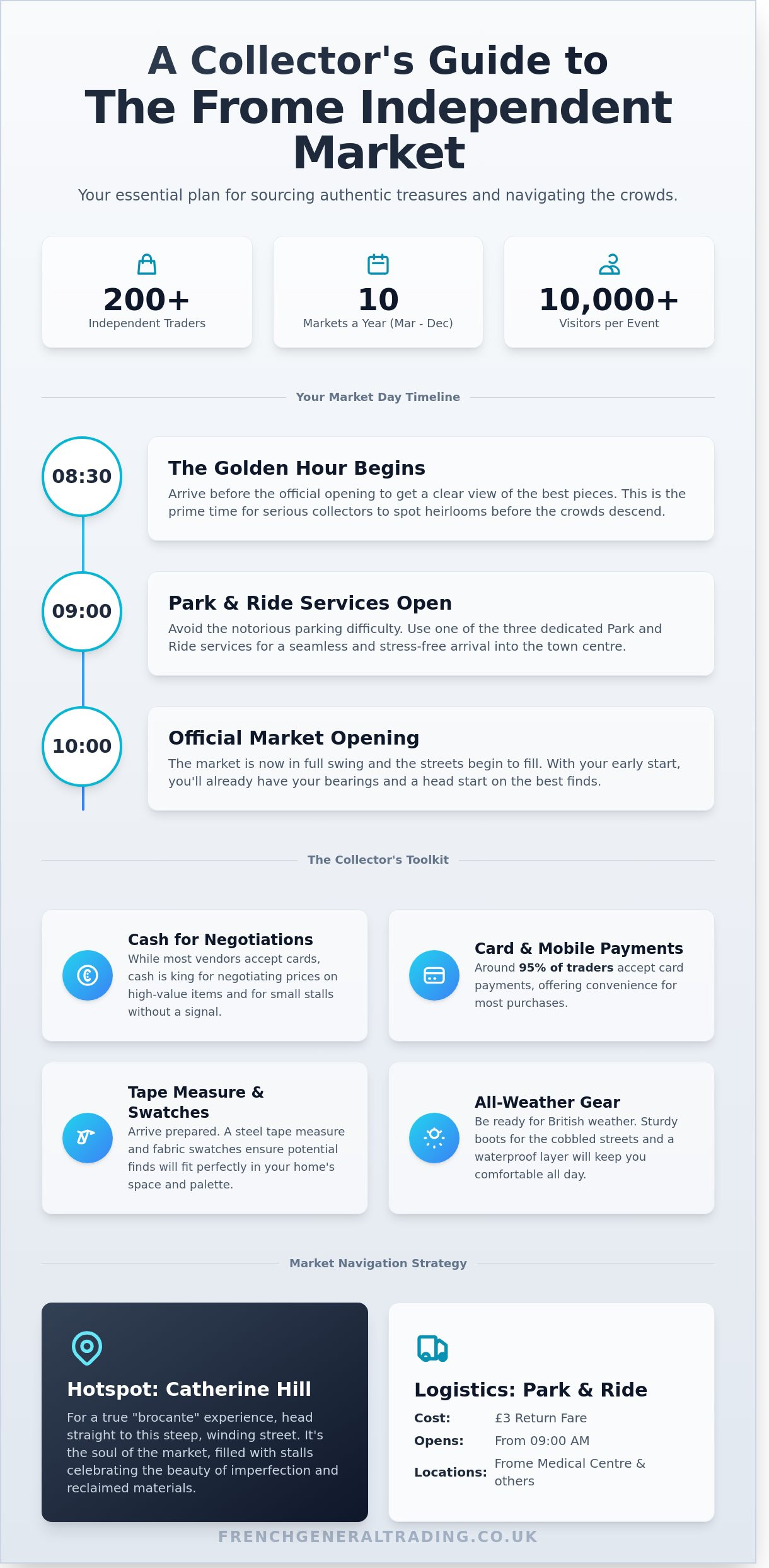
The market isn't just a shopping trip; it's a seasonal ritual that breathes life into the Somerset streets from March through to December. To make the most of this frome independent market guide, you must align your visit with the first Sunday of these ten months. The town transforms entirely, welcoming over 200 independent traders who bring everything from rustic garden ornaments to refined interior treasures that carry the weight of decades past.
Success depends on timing. While the official opening is 10:00, the most seasoned collectors arrive by 08:30 or 09:00. This golden hour allows you to walk the cobblestones before the crowds swell, giving you a clear view of the weathered textures and authentic patinas that define the best finds. If you're hunting for a specific French mirror or a heavy oak table, being first on the scene is the difference between securing a piece of history and watching it go home with someone else. Preparing for the British weather is equally vital; a sturdy pair of boots and a waterproof layer ensure you can maintain a leisurely pace even if the Somerset clouds decide to open.
Travel and Arrival Strategy
Parking in Frome on market day is notoriously difficult for latecomers. The three dedicated Park and Ride services, operating from 09:00 at sites like the Frome Medical Centre, offer a seamless entry for a £3 return fare. Once in the centre, prioritise your route based on your aesthetic goals. Those seeking a true brocante experience should head straight to Catherine Hill. This steep, winding artery of the town is where the soul of the market resides; it's filled with shops and stalls that celebrate the quiet beauty of imperfection and the enduring quality of reclaimed materials.
Practicalities for the Serious Collector
A serious collector never arrives empty-handed. Bring a steel tape measure and fabric swatches to ensure a potential find fits your home’s existing palette and proportions. While 95% of traders now accept card payments via mobile readers, carrying some cash remains wise for negotiating on higher-value items or for those rare moments when signal fails on the historic backstreets. If you discover a larger piece, such as a vintage farmhouse table with a rich history, don't worry about the journey home. Many traders can recommend reliable national couriers who specialise in the delicate handling of antique lighting and glassware, ensuring your new treasure arrives safely at your door.
The Connoisseur’s Approach to Sourcing Antiques
Walking through the bustling stalls on the first Sunday of the month requires more than just a keen eye; it demands a shift in perspective. You aren't merely browsing for household utilities. This frome independent market guide encourages you to adopt the "brocante" mindset, where a piece's history is as valuable as its function. Authentic French antiques carry a specific weight of time that modern mass-produced items lack. True connoisseurs look for the "soul" of an object, which often reveals itself in the way a 19th-century oak table has smoothed at the corners from generations of shared meals. Identifying these hallmarks of quality ensures your home feels curated rather than merely decorated.
Spotting Authentic Patina and Texture
Genuine patina is a slow, chemical dialogue between an object and its environment. It cannot be rushed or easily faked. When you examine a vintage mirror, look for foxing. These are the small, dark desaturated spots caused by the oxidation of mercury or silvering over 100 years or more. Modern reproductions often use acid to mimic this effect, but the result looks uniform and flat. Authentic foxing is erratic and deep, telling a story of damp French chateaux and passing decades. Similarly, the weathered iron of a 1920s garden chair or the grey, mottled surface of a reclaimed zinc florist's table offers a tactile honesty. These marks of time are virtues. They represent a life lived, providing a rugged contrast to the sterile surfaces of contemporary design.
Building a Relationship with Curators
The most successful collectors don't just buy objects; they interview them. Engaging with curators at the market allows you to bridge the 500-mile gap between the French countryside and your own living room. Ask specific questions about where a piece was found. A curator might explain that a particular set of shutters was salvaged from a farmhouse in the Loire Valley, or that a heavy linen roll dates back to a 1940s weaving atelier. This provenance adds layers of meaning to your purchase. Expert sourcing acts as a filter, protecting you from the 15% to 20% of items in the wider market that are actually clever modern replicas. Trusting a curator's eye means you're investing in a piece that has already survived a century and possesses the structural integrity to last another.
- Check the joinery: Look for hand-cut dovetails or wooden dowels rather than modern Phillips-head screws.
- Feel the finish: Authentic beeswax or shellac finishes have a soft, organic warmth that polyurethane cannot match.
- Study the wear: Genuine wear appears in logical places, like the rungs of a chair where feet have rested for 80 years.
The frome independent market guide reminds us that the thrill of the find is only half the joy. The true reward is bringing home a storied relic that anchors your space with a sense of permanence and European charm.
The Lived-in Aesthetic: Styling Your Market Discoveries
Once you've navigated the bustling stalls using your frome independent market guide, the true joy lies in the transition from the market square to your own living space. Integrating a 19th-century French workbench or a set of industrial chairs into a contemporary home requires a delicate touch. It's not about recreating a period room; it's about creating a conversation between the past and the present. The most successful interiors avoid the stiff, untouchable atmosphere of a museum by embracing a layered approach. This involves mixing the smooth, clean lines of modern furniture with the tactile, storied surfaces of antique wood and weathered metal.
Layering is an art form that thrives on contrast. You might place a sleek, minimalist lamp atop a rustic oak commode, or drape a heavy linen throw over a mid-century leather chair. These juxtapositions prevent a room from feeling one-dimensional. With over 10,000 visitors flocking to Frome on a typical market Sunday, the competition for the best pieces is high, but the reward is a home that feels curated rather than decorated. French decorative objects, such as a large zinc florist’s bucket or a cluster of 1920s glass apothecary jars, serve as brilliant focal points that draw the eye and ground a room's aesthetic in history.
Creating a Narrative in Your Home
A single antique oil painting or a foxed mercury glass mirror can instantly shift the mood of a space. These pieces carry a weight of history that mass-produced items simply cannot replicate. To let these stories breathe, it's vital to provide 'breathing space'. Designers often suggest the 15% rule: leave roughly 15% of your wall or floor space unoccupied to allow your standout antiques to command attention. This philosophy extends to the outdoors as well. Garden antiques, like a weathered stone trough or a pair of wrought iron chairs, bring the romantic allure of a French atelier to a Somerset terrace, bridging the gap between your home's interior soul and its natural surroundings.
The Beauty of Imperfection
True character lives in the details that others might dismiss as flaws. A slightly chipped glaze on a confit jar or the faded grain of a farmhouse table tells a story of decades of use. This 'perfectly imperfect' quality is what gives a home its warmth. Mixing high and low elements is a key strategy here; try pairing a grand, ornate gilt mirror with a simple, utilitarian trestle table. For those looking to master this balance, learning how to style a gilt mirror can provide the necessary inspiration to blend opulence with rustic charm. By celebrating these marks of time, you create a space that feels authentic and deeply personal.
Ready to find the next chapter for your home? Explore our latest brocante finds and discover pieces with a soul of their own.
Curating a Timeless Home: Beyond the Market Day
The energy of a market Sunday is intoxicating, yet the search for truly soulful pieces shouldn't be confined to a single day of the month. While this frome independent market guide highlights the best of the physical event, the most considered homes are often built during the quiet moments in between. Sourcing antiques is a slow, intentional practice. It’s about waiting for the piece that speaks to you, whether that’s a scrubbed pine table with a century of knife marks or a linen press with its original, heavy brass hardware. By choosing these storied objects, you're making a conscious choice for the planet. You're opting for reclaimed materials and craftsmanship that has already survived generations, standing in quiet defiance of the 22 million pieces of furniture thrown away in the UK every year.
The Perpetual Hunt for the Unique
Using a frome independent market guide is a brilliant starting point for any collector, but true curation is a perpetual journey that extends far beyond the town centre. Staying connected with a dedicated boutique allows your search to continue in a more contemplative way. Our digital gallery serves as a year-round brocante, offering a quiet space to explore the grain of a rustic farmhouse table or the foxing on an antique mirror without the market crowds. Every piece is hand-selected for its "âme", or soul, ensuring that the authenticity you felt on market day translates perfectly into your living space. We prioritise the lived-in aesthetic, celebrating the perfectly imperfect marks of time as virtues rather than flaws.
A National Service for Antique Lovers
The logistical challenge of transporting a heavy apothecary cabinet or a fragile set of garden chairs can often dampen the thrill of the find. We’ve spent 20 years perfecting the art of antique transport, ensuring that your investment is protected from the moment it leaves our workshop until it’s placed in your room. Specialised handling is a necessity; it preserves the fragile patina of aged wood and metal that mass-produced items simply lack. We coordinate with couriers who understand the nuances of heritage pieces, providing peace of mind that your find will arrive with its history intact. Whether you are located in the heart of Somerset or the furthest reaches of the Highlands, our service bridges the gap between the French countryside and your front door. Explore our curated collection of French antiques with national delivery and find the next chapter for your home’s story.
Embracing the Timeless Character of Your Next Find
Armed with this frome independent market guide, you're ready to navigate the monthly bustle of Somerset’s most vibrant streets with a curator’s eye. Focus your energy on the St Catherine’s district where authentic patina and weathered textures await those who arrive before the 10:00 am rush. Sourcing antiques is about more than just a purchase; it’s about finding a piece that carries its history in every visible grain and soft edge.
If the market day ends and your perfect statement piece remains elusive, our collection offers a year-round sanctuary for the discerning collector. We draw upon over 20 years of expert sourcing experience to bring one-of-a-kind French treasures directly to your door. Our team manages the delicate logistics through a specialised national delivery service for fragile antiques, ensuring that a piece of the French countryside arrives safely at your British home. Each item we select is chosen for its unique soul and enduring charm. Discover our latest French antique arrivals with national UK delivery and continue your journey of creating a home that feels gathered rather than decorated. Your next heirloom is waiting to be found.
Frequently Asked Questions
When does the market take place and what are the opening hours?
The Frome Independent Market takes place on the first Sunday of every month from March through to December, opening its gates from 10:00 until 15:00. These ten dates throughout the year transform the town centre into a vibrant hub of heritage and craftsmanship. It's best to arrive by 09:30 to find a quiet moment before the crowds swell, ensuring you have the first pick of the weathered treasures that line the historic streets.
How can I travel to the market if I am coming from outside the local area?
You can reach the market by taking a direct train to Frome station, which sits just a 10 minute walk from the main stalls. For those driving from further afield, dedicated Park and Ride services operate from Selwood Academy and Frome Medical Practice for a small fee of £3 per car. This avoids the congestion of the town centre, allowing you to begin your journey with a peaceful stroll into the heart of the event.
Is the market suitable for finding large pieces of furniture like wardrobes?
This frome independent market guide confirms that the event is an excellent venue for sourcing substantial pieces like wardrobes, dressers, and farmhouse tables. You'll often find these larger items situated in the Village Green or the Flea Market area near the car park. Each piece carries a unique history, with 19th-century pine wardrobes frequently appearing alongside mid-century sideboards, all waiting to bring their storied presence into a modern home.
How do I know if an antique mirror is an authentic French piece?
Authentic French mirrors are often identified by the presence of original mercury glass, which produces a soft, slightly greyish reflection and distinctive foxing or dark spots. Look closely at the frame for hand-carved gesso and gold leaf rather than modern spray paint. A true 19th-century Louis Philippe mirror will typically feature rounded top corners and a beaded inner edge, showing the gentle wear of nearly 200 years of history.
What should I do if I find a large item but cannot transport it home myself?
Most specialist antique dealers at the market provide professional delivery services or can recommend reliable local couriers who handle delicate items. If you fall in love with a heavy zinc table, expect to pay between £50 and £150 for regional delivery depending on the distance. It's a small price to pay to ensure your found treasure is transported with the care and reverence its age deserves.
Are the items at the market sustainable and ethically sourced?
Every antique found at the market represents a 100% sustainable choice, as you're preserving a piece of history rather than consuming new resources. Choosing a 100-year-old oak table over a mass-produced alternative prevents the carbon cost of modern manufacturing and shipping. These items were built to last for generations, using traditional joinery techniques that make them far more ethically sound than any contemporary flat-pack furniture.
Can I find specific French items like zinc tables or toleware at the market?
You'll certainly find specific French treasures like weathered zinc café tables, hand-painted toleware, and rustic linens among the specialist stalls. This frome independent market guide highlights that many traders travel directly to the French countryside to source authentic brocante. These pieces often feature the sought-after patina of 50 or 60 years of use, offering a tangible connection to the French aesthetic that fits perfectly within a British interior.
What happens if I miss the market date but still want to source unique antiques?
If you miss the monthly event, you can still find an exquisite selection of French antiques at our permanent showroom or via our online collection. Frome is home to several year-round boutiques on Catherine Hill that curate similar high-quality pieces every day of the week. Our own atelier focuses on sourcing items with a particular soul and history, ensuring that the thrill of the find is available whenever inspiration strikes.